05 Jul 2026
Best SEO APIs for Developers in 2026: Complete Guide to Website Analysis & Automation
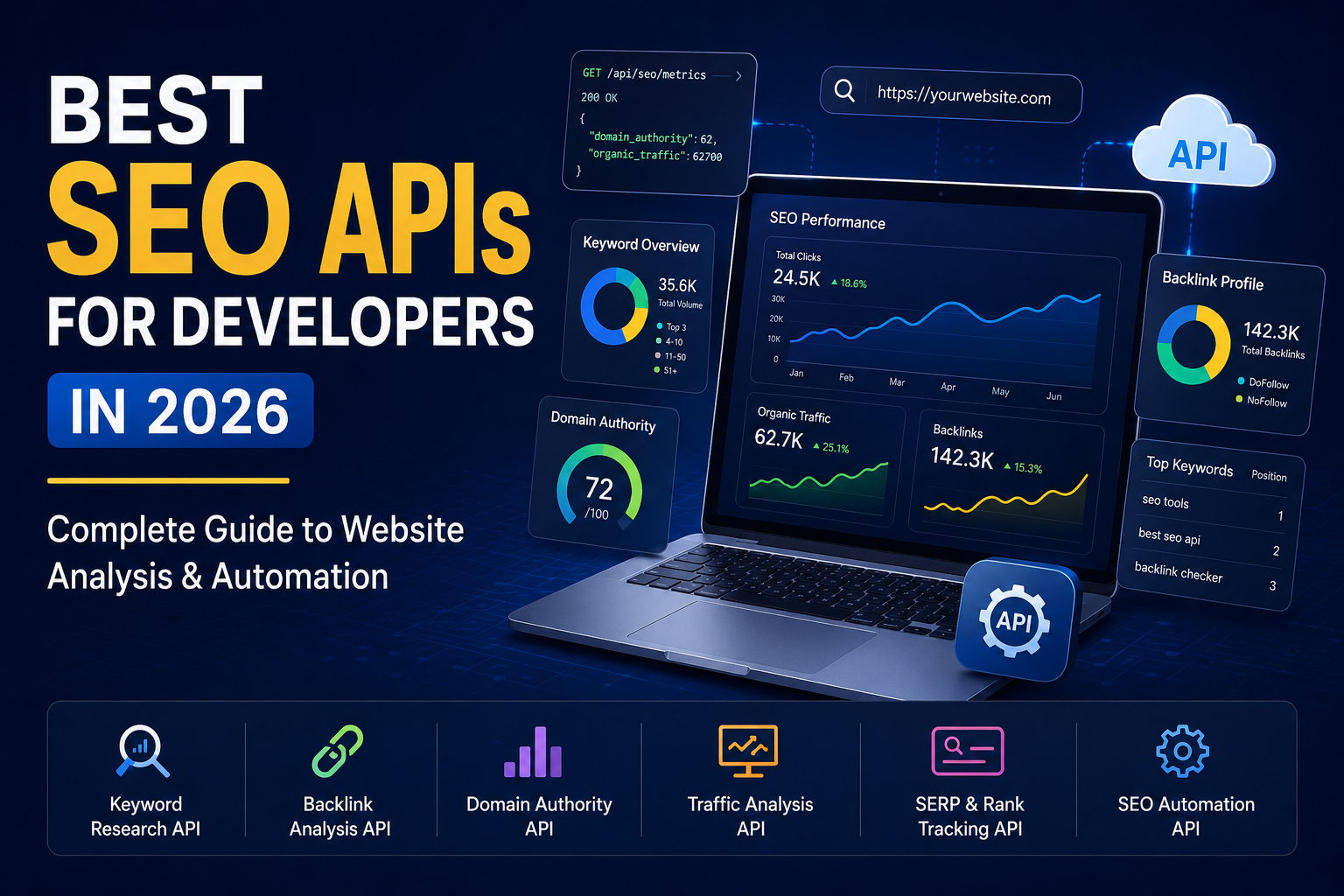
Discover the best SEO APIs for developers in 2026. Compare backlink APIs, keyword research APIs, SERP APIs, domain authority APIs, and website traffic APIs to build powerful SEO tools faster.
Best SEO APIs for Developers in 2026: Complete Guide to Website Analysis & Automation
Search Engine Optimization (SEO) has become a core part of modern web applications, marketing platforms, browser extensions, and SaaS products. Whether you're building an SEO tool, competitor analysis platform, keyword tracker, or website auditing software, manually collecting SEO data is no longer practical.
SEO APIs provide developers with reliable access to keyword rankings, backlinks, domain authority, search engine results, website traffic estimates, technical SEO metrics, and much more all through structured REST endpoints.
Instead of scraping search engines or maintaining large datasets, developers can integrate SEO APIs to automate data collection, improve accuracy, and significantly reduce development time.
In this guide, we'll compare the best SEO APIs available in 2026, explain what features matter most, discuss real-world use cases, and help you choose the right API for your project.
Table of Contents
- What is an SEO API?
- Why Developers Need SEO APIs
- Benefits of Using SEO APIs
- How We Selected the APIs
- Features to Look For
- Best SEO APIs in 2026
- API Comparison Table
- Common Use Cases
- Frequently Asked Questions
- Final Thoughts
What is an SEO API?
An SEO API is a web service that allows developers to retrieve SEO-related information programmatically.
Instead of manually checking search engine rankings, backlinks, keyword volumes, or domain authority, developers can simply send an API request and receive structured JSON data within milliseconds.
Most SEO APIs support REST architecture, making integration simple for virtually any programming language.
Common SEO data includes:
- Domain Authority
- Page Authority
- Backlink Profiles
- Keyword Rankings
- Keyword Search Volume
- Search Engine Results (SERP)
- Website Traffic Estimates
- Competitor Analysis
- Technical SEO Metrics
- Domain Information
Why Developers Need SEO APIs
Modern SEO software depends heavily on automation.
Instead of building expensive crawlers or maintaining billions of indexed pages, developers rely on trusted SEO data providers.
SEO APIs help applications:
- Analyze websites automatically
- Monitor competitors
- Build keyword research tools
- Create SEO dashboards
- Track rankings
- Generate SEO reports
- Build browser extensions
- Power marketing automation platforms
Without APIs, collecting this information manually would require enormous infrastructure and ongoing maintenance.
Benefits of Using SEO APIs
Faster Development
Integrate SEO data within minutes instead of building your own crawling infrastructure.
Reliable Data
Access structured, validated, and frequently updated SEO information.
Automation
Run scheduled website audits, monitor rankings, and generate reports automatically.
Scalability
Handle thousands or even millions of API requests without managing complex backend systems.
Cost Efficiency
Reduce development and infrastructure costs by using specialized API providers.
What Makes a Great SEO API?
Before selecting an SEO API, consider these important factors:
- Data accuracy
- Update frequency
- Response speed
- Comprehensive documentation
- Authentication methods
- Rate limits
- Pricing flexibility
- Global data coverage
- Error handling
- SDK availability
- Customer support
Best SEO APIs for Developers in 2026
1. SEMrush API
Overview
SEMrush provides one of the largest SEO databases available for developers and marketing platforms.
Key Features
- Keyword Research
- Organic Rankings
- Competitor Analysis
- Traffic Estimates
- Backlink Analysis
- Domain Analytics
Best For
Professional SEO platforms and enterprise marketing software.
2. Ahrefs API
Overview
Ahrefs is known for its massive backlink index and high-quality link intelligence.
Key Features
- Backlink Database
- Referring Domains
- Anchor Text
- Keyword Explorer
- Site Explorer
Best For
Backlink analysis and link-building tools.
3. Google Search Console API
Overview
Google Search Console provides official search performance data directly from Google.
Key Features
- Search Queries
- Clicks
- Impressions
- Average Position
- CTR
- Index Coverage
Best For
Website owners monitoring their own properties.
4. Moz API
Overview
Moz offers domain metrics widely used throughout the SEO industry.
Key Features
- Domain Authority
- Page Authority
- Spam Score
- Link Metrics
Best For
Authority measurement and domain evaluation.
5. DataForSEO API
Overview
DataForSEO offers one of the most complete SEO data platforms for developers.
Key Features
- SERP API
- Keyword Data
- Backlinks
- Business Data
- Reviews
- Google Maps
Best For
Large SaaS platforms and agencies.
6. SERPAPI
Overview
SERPAPI provides real-time Google search results without scraping.
Key Features
- Google Search Results
- Images
- Shopping
- News
- Videos
- Local Results
Best For
Applications requiring live search engine results.
7. Open Marketplace SEO APIs
Overview
Open Marketplace provides developers with access to multiple SEO APIs through a single marketplace.
Instead of searching across multiple providers, developers can discover APIs for:
- Website Traffic
- Domain Authority
- Domain Metrics
- Backlink Extraction
- Keyword Research
- Search Engine Data
- SEO Automation
Best For
Developers looking for flexible API solutions with straightforward integration.
SEO API Comparison Table
| API | Keywords | Backlinks | Domain Authority | Traffic | SERP | Best For |
|---|---|---|---|---|---|---|
| SEMrush | ✅ | ✅ | ❌ | ✅ | ❌ | Enterprise SEO |
| Ahrefs | ✅ | ✅ | ❌ | ❌ | ❌ | Link Analysis |
| Google Search Console | ✅ | ❌ | ❌ | ❌ | ❌ | Website Owners |
| Moz | ❌ | ✅ | ✅ | ❌ | ❌ | Domain Metrics |
| DataForSEO | ✅ | ✅ | ✅ | ✅ | ✅ | SaaS Platforms |
| SERPAPI | ❌ | ❌ | ❌ | ❌ | ✅ | Search Results |
| Open Marketplace | ✅ | ✅ | ✅ | ✅ | ✅ | Developers |
Common SEO API Use Cases
SEO Platforms
Build complete SEO dashboards for agencies and businesses.
Website Auditing
Automatically scan websites for SEO issues.
Competitor Analysis
Monitor competing websites and compare performance.
Browser Extensions
Display SEO metrics directly in the browser.
Lead Generation
Evaluate potential client websites automatically.
Marketing Automation
Generate reports and monitor website health at scale.
Rank Tracking
Track keyword rankings across multiple search engines.
Business Intelligence
Combine SEO metrics with analytics dashboards.
Common Mistakes Developers Make
- Choosing APIs based only on pricing
- Ignoring rate limits
- Not caching responses
- Forgetting retry mechanisms
- Using outdated datasets
- Not monitoring API usage
- Ignoring documentation
Frequently Asked Questions
What is an SEO API?
An SEO API provides programmatic access to search engine optimization data like keywords, backlinks, rankings, and domain metrics.
Which SEO API is best?
The best API depends on your project requirements. Enterprise tools often use SEMrush or DataForSEO, while developers may choose specialized APIs based on their needs.
Can I build an SEO tool using APIs?
Yes. Most SEO platforms rely heavily on APIs for keyword research, backlinks, SERP analysis, and website metrics.
Are SEO APIs accurate?
Reputable providers continuously update their datasets to maintain reliable and accurate information.
Do SEO APIs support REST?
Yes. Most modern SEO APIs provide REST endpoints with JSON responses.
Can I automate SEO reports?
Absolutely. APIs make it easy to generate scheduled SEO reports without manual work.
Which API provides backlink data?
Several providers offer backlink APIs, including Ahrefs, SEMrush, DataForSEO, and marketplace solutions.
Are there free SEO APIs?
Some providers offer free plans or limited trial access, while enterprise-level APIs typically require a paid subscription.
Final Thoughts
SEO APIs have become essential building blocks for developers creating modern SEO software, analytics platforms, browser extensions, and marketing automation tools.
Whether you need keyword research, backlink intelligence, website traffic estimates, SERP monitoring, or technical SEO data, choosing the right API can significantly reduce development time while improving data quality.
Before making a decision, compare available features, pricing, documentation, scalability, and integration options to ensure the API aligns with your project's long-term goals.
As the SEO landscape continues to evolve, reliable API access will remain one of the most efficient ways to build scalable, data-driven applications.